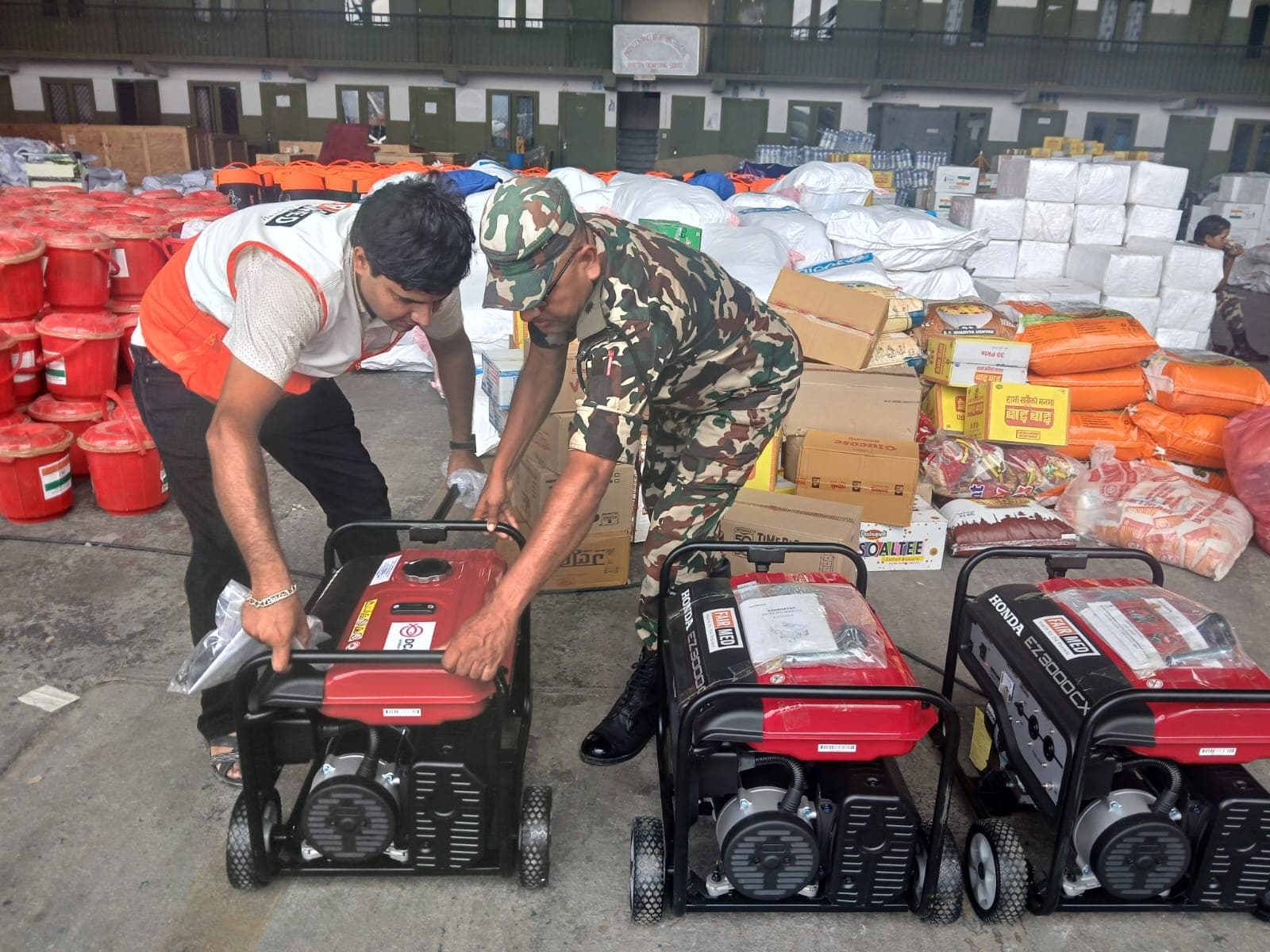
Among other things, FAIRMED is providing generators, which are being transported to Rasuwa by military aircraft. These are necessary for critical health services, such as the storage of vaccines. Among other things, FAIRMED is providing generators, which are being transported to Rasuwa by military aircraft. These are necessary for critical health services, such as the storage of vaccines.

Our team on the ground is standing by the people during this difficult time. At the request of the Nepalese government, we will be providing emergency aid over the next three months to approximately 500 households that have been particularly hard hit—that is, about 2,500 people. If the crisis persists, the aid may be extended. Our efforts focus on people who are particularly hard hit by the crisis: people with disabilities, young children, pregnant and breastfeeding women, and older adults.
Our aid begins where it is most urgently needed: with clean drinking water, medications, and disinfectants, as well as food items such as rice, lentils, and vegetable oil. We also distribute kitchen utensils, blankets, bedding, and clothing, and support families who have lost their homes by providing temporary shelter.
But emergency aid means more than just meeting immediate needs. To ensure that sick and injured people continue to receive medical care, we make sure that health centers are supplied with electricity through generators and solar solutions. Mosquito nets and psychosocial support also help protect people from further health consequences of the crisis.
We Need Your Support
Your donation provides immediate help where it is needed most right now. It helps ensure that families have access to clean water and food, that sick people receive medical care, and that particularly vulnerable people are not left to fend for themselves.
Please help us give the people of Nepal hope, protection, and much-needed support. Thank you very much.

Every donation helps us act quickly.
Thank you so much for not leaving the people on the ground to face their greatest hardships alone.
Extent of the Destruction
The severe flash flood swept away entire villages and buried them under debris. Roads, bridges, and hydroelectric plants were damaged by the mudslide, and power and communication lines were partially cut off. A total of over 20 000 security and rescue personnel were mobilized for the search and rescue operations. The government, in cooperation with the relevant authorities and organizations, is carrying out comprehensive search, rescue, and relief efforts. More than 13 000 people have already been rescued.
Cause unclear
The exact cause of the disaster remains under investigation. An initial explanation points to an event in the glacial region: An avalanche may have blocked a tributary of the Bhotekoshi River, causing large volumes of water to back up. The river originates in the Tibetan Plateau. When such a natural dam suddenly breaks, enormous masses of water—along with ice, mud, and debris—can rush down the valley.
Recent satellite imagery also provides evidence of a possible link to an avalanche. According to the Nepalese Disaster Management Authority, a mixture of snow and rock may have triggered a massive mudslide on the Lhende River. However, it is not yet clear exactly which events ultimately led to the devastating flood.
While the FAIRMED projects are not directly affected by the disaster, the Rasuwa District is adjacent to Sindhupalchok, where we operate.