Due to the high number of bites and the often severe consequences, the World Health Organization (WHO) classifies snakebite envenoming as a neglected tropical disease. Like many other diseases of poverty, snakebites primarily affect people in poor rural regions and pose great challenges to weak health systems. The production of antivenoms is complex, as snake venoms vary greatly, and the production often requires several snake venoms—often a logistical impossibility for poor countries.
In Nepal too, snakebites are a major problem: each year, around 40,000 people are bitten in the Nepalese lowlands, and more than 3,000 of them die from the effects of the envenoming. In some cases, affected individuals must have limbs amputated, which prevents them from working and drives them further into poverty.
FAIRMED's commitment to the poorest
FAIRMED relies on an approach to combat snakebites that has already proven effective for other diseases of poverty like leprosy or elephantiasis. We train medical professionals and volunteer health workers, so they can recognize snakebites early, treat them correctly, and inform the population about protective measures. They learn, among other things, to identify dangerous snake species and which first aid measures are important in an emergency.
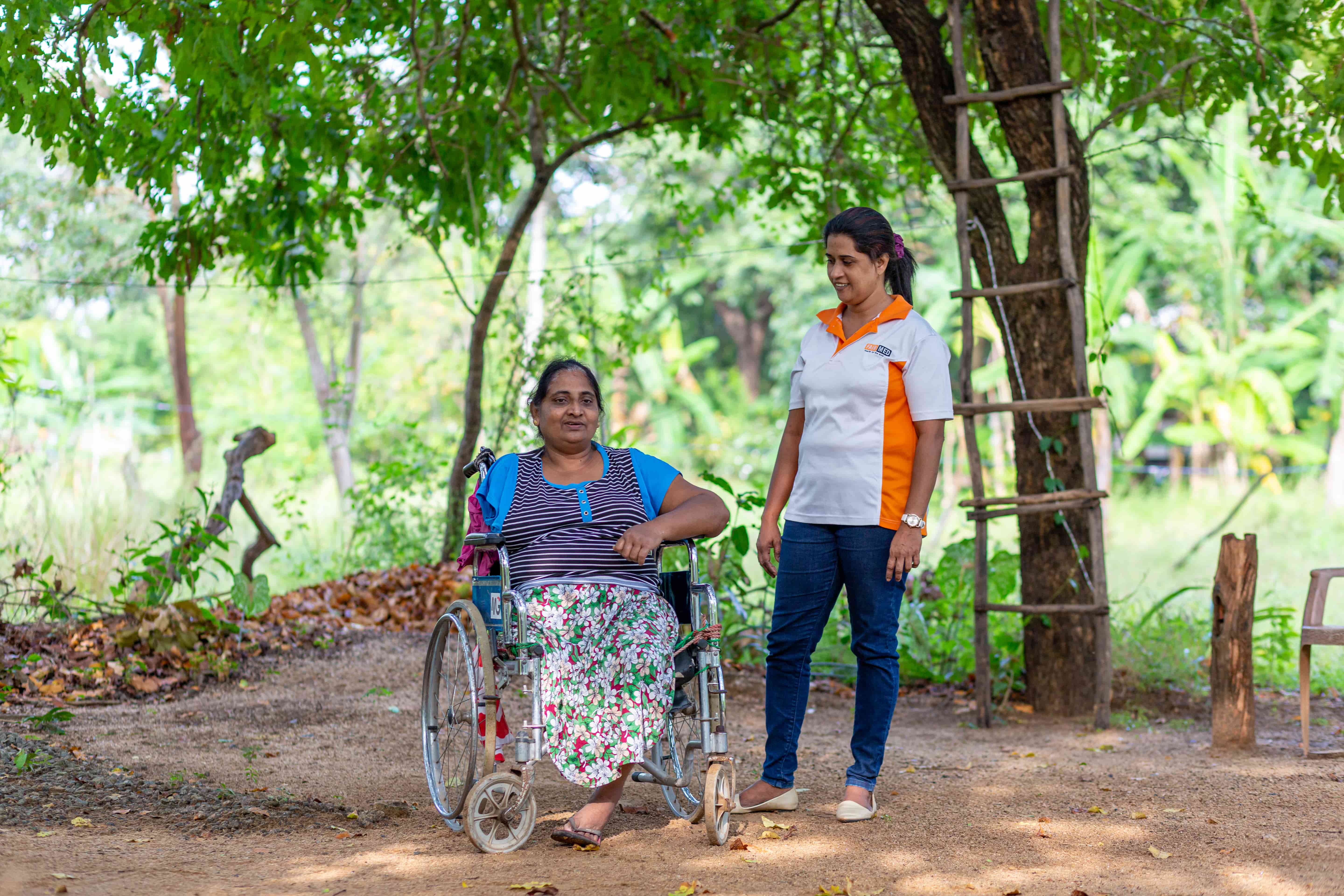
At the same time, we are strengthening healthcare in remote regions. We equip health facilities with the necessary medical materials and help ensure that affected individuals receive medical assistance quickly in emergencies. In this way, FAIRMED helps prepare the healthcare system in Nepal better for the challenge of snakebites. Additionally, FAIRMED advocates for people who live with a disability due to snakebites, ensuring they receive the necessary support and rehabilitation.
Effects of climate change
In the climate debate, extreme weather phenomena and natural disasters are often the focus. However, the global temperature rise could also have other, rather unexpected consequences: poisonous snakes are settling closer to humans, and an increase in snakebites poses new challenges for poor countries.
More on the topic (in German)
Your donation makes a difference!
A diagnosis doesn't have to be a death sentence. With your donation, you give the poorest people in the most remote corners of the world a chance at a healthy future. Every contribution helps change lives.
Your donation matters!
A glimpse into FAIRMED's projects

Nepal
Project «Sindhu»

Central African Republic
Project «Seni na Siriri»
Cameroon