Why we are needed
To stop the disease, FAIRMED has organized large-scale mass treatment campaigns in recent years in collaboration with the Nepalese government. Over the course of several years, people in high-risk areas have received vital medications that interrupt the transmission of the disease. To ensure that these successes are sustainable and that elephantiasis is eradicated once and for all, targeted follow-up activities are now needed.
Help at the End of the World
In mass campaigns, it is particularly important to reach the majority of the affected population and to ensure that treatment is consistently administered over several years. Only in this way can the cycle of infection and transmission be broken in a sustainable and lasting manner. However, this requires reaching people even in Nepal’s most remote regions. Since FAIRMED is known in Nepal as an organization that operates in remote and hard-to-reach areas, it was not surprising that the Nepalese government asked FAIRMED to assist with the mass campaigns.
How we work
Through the “Working Together to Combat Elephantiasis” project, we are supporting the government of Nepal in taking the final step toward eliminating the disease by 2030. Together with the Ministry of Health, provincial and local governments, the World Health Organization (WHO), and local partner organizations, we are assessing whether previous mass treatment campaigns have been successful and working to prevent the disease from spreading again.
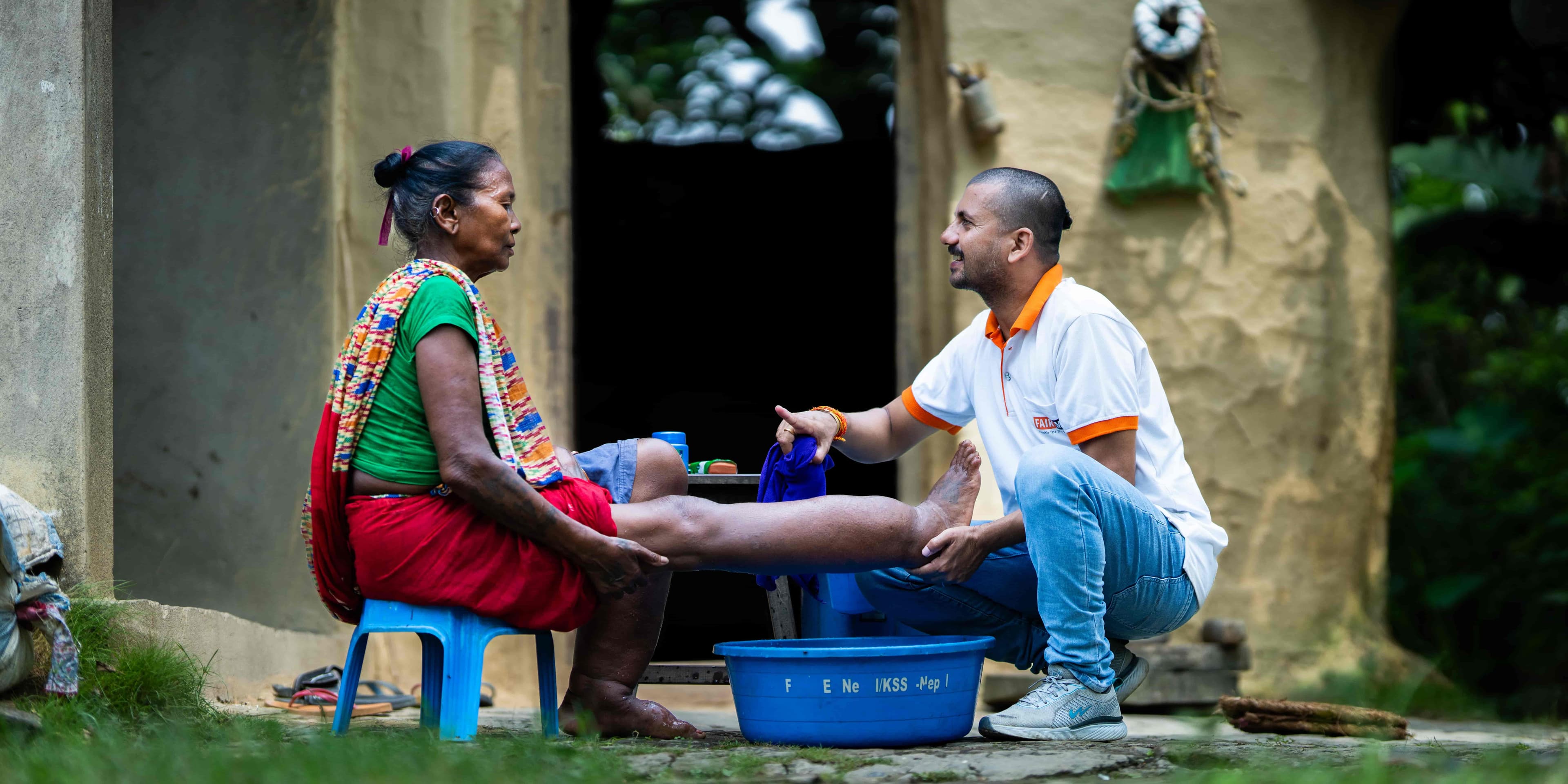
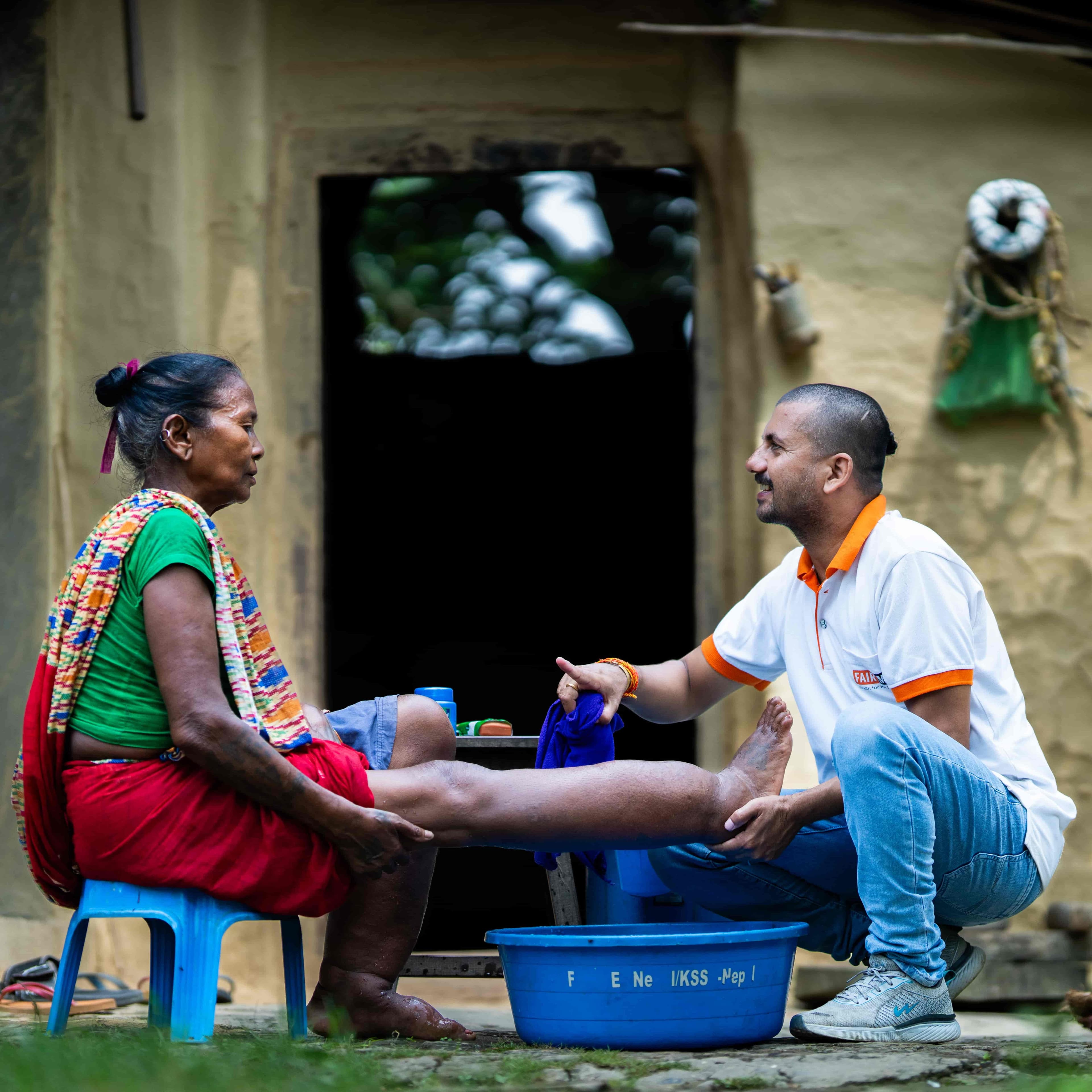
To this end, people in the affected communities are being tested. If an infection is detected, those affected and their families receive targeted treatment immediately. Where necessary, additional mass treatment campaigns are carried out to eliminate the last remaining pockets of infection. At the same time, the project supports people who are already living with the consequences of the disease. Self-help groups are strengthened, those affected learn to better manage their condition, and local health services are supported in ensuring long-term care.
In this way, the project combines prevention, treatment, and care. It protects future generations from a preventable disease while simultaneously improving the quality of life for people already affected by elephantiasis. The project is being implemented in 13 communities in the districts of Jhapa and Kapilvastu in the provinces of Koshi and Lumbini and is making a significant contribution to Nepal’s goal of eliminating lymphatic filariasis as a public health problem by 2030.

Do you have questions on the project?
If so, Sybille Imhof, our project manager for Nepal, will be happy to help. You can reach her by e-mail at info@fairmed.ch.
Your donation helps
With your donation, you’re giving the poorest people in Nepal the chance for a healthy future. Every contribution helps change lives.
